
The cheapest years your asphalt can buy.
Asphalt sealing for driveways, parking lots, and sidewalks across Seattle and King, Snohomish, and Pierce counties. A sealcoat keeps rain, sun, and vehicle fluids off the binder, the glue that holds your asphalt together, and it only earns its keep over pavement that’s still sound. We’ll tell you plainly which yours is. Estimates are free, every day.
Open every day, 6 AM to 6 PMKing, Snohomish & Pierce
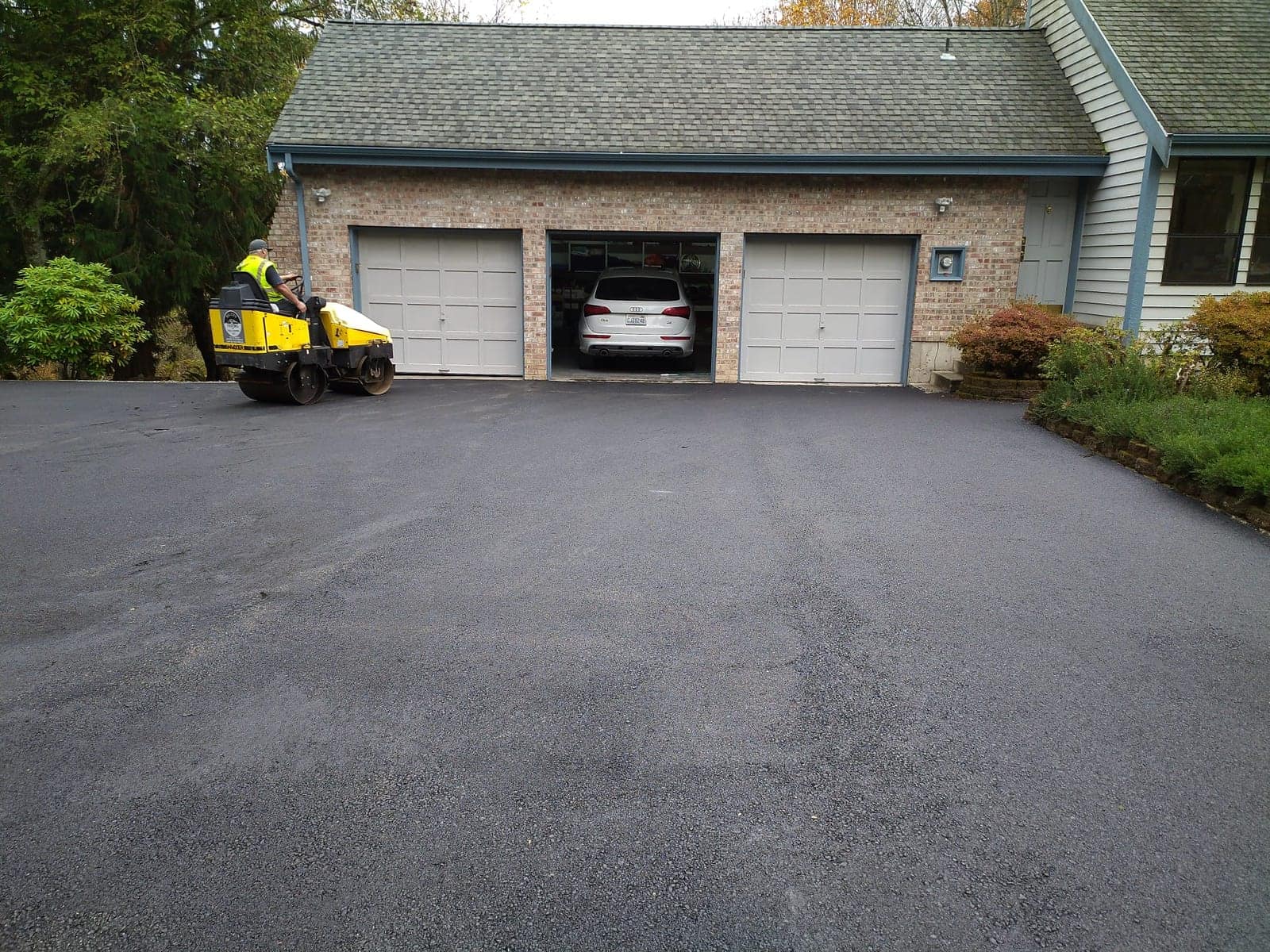
When does asphalt need sealing?
Sealcoating belongs on sound pavement on a cycle, every two to three years for most Seattle-area surfaces. You can read when it’s due: the black going gray and dry, water soaking in instead of beading off, hairline cracks starting to spread. If the pavement underneath is failing, sealing is the wrong place for your money, and we’ll say so.
Applies to
- Driveways
- Parking lots
- Sidewalks
Asphalt gone gray and dry instead of deep black
Hairline cracking spread across the whole surface
Water soaking in instead of running off
Two or three years since the last coat, or no record of one
How does a seal coat go down?
Sealing is a preparation trade. The coat itself is the fast part. The work is everything that makes it bond and cure.
Clean and prep
The surface is cleaned back to bare pavement, cracks are filled, and oil spots are treated: sealer bonds to asphalt, not to dust.
The coat
Sealer goes down in even coats on dry pavement, worked into the surface texture, with the edges cut clean.
The cure
The surface stays closed to traffic while it cures, usually a day or two, scheduled around the Puget Sound forecast. We tell you exactly when it’s ready to drive.
What drives the cost of sealcoating?
Sealing is the least expensive work in the trade, and the estimate is free. The number moves with the area being coated, how much cleaning and crack filling the surface needs first, the number of coats the wear calls for, and the edge detail: a wide open lot rolls faster than a driveway with landscaping down both sides.
Call (253) 397-8674- Surface area
- Coverage is the base of the price. Sealer is applied by the square foot, in one or two coats depending on wear and traffic.
- Prep condition
- Cracks to fill, oil spots to treat, and heavy cleaning add prep time. A surface on its regular cycle needs less of all three.
- Edges and obstacles
- Islands, curbs, tight edges, and hand-work zones take longer than open pavement does.
How long does sealcoating take, and when can it happen?
Sealer needs dry pavement, mild temperatures, and a dry window to cure, which in the Puget Sound area means roughly May through September. The coating itself usually goes down in a day. The surface then stays closed to traffic while it cures, typically a day or two. We schedule around the forecast and tell you exactly when you can drive on it.
Prep first, seal second.
Sealing is where corners get cut in this trade: thin coats, wet pavement, no prep. Twenty-plus years around Puget Sound taught us the opposite habit. We prep first, we tell you honestly whether it’s even time yet, and we answer the line every day, 6 AM to 6 PM.
The proof is in the photographs.
Our own crews on our own jobs around Puget Sound, every frame captioned as exactly what the camera saw. Not a stock photo among them.
See the asphalt projectsAsphalt sealing, answered.
The questions we answer on the phone all day, written down. If yours isn’t here, call. The line’s open every day, 6 AM to 6 PM.
- What does sealcoating actually do for asphalt?
- Sealcoat is a protective layer applied over the pavement that blocks water, UV rays and vehicle fluids: the three things that age asphalt fastest. It slows oxidation, keeps small cracks from growing, and restores that deep, uniform black finish. It’s the single most cost-effective way to protect a paved surface.
- How often should asphalt be sealed in the Seattle area?
- As a rule of thumb, most driveways and parking lots benefit from sealcoating every two to three years, depending on traffic and exposure. Our wet climate makes sealing especially worthwhile here: it’s what keeps winter rain out of the pavement structure. We’ll look at your surface and tell you honestly whether it’s time.
- Can you sealcoat in the rain?
- No: sealer needs dry pavement, mild temperatures and a dry window to cure, which typically means keeping traffic off the surface for a day or two. We schedule sealing work around the Puget Sound forecast and let you know exactly when your surface is ready to use again.
- Is sealcoating really worth it, or can I just repair damage later?
- Sealing is far cheaper than the repairs it prevents. Unsealed asphalt lets water in, and water damage means crack repair, patching, and eventually resurfacing, all of which cost many times more than a maintenance seal. Protecting the surface on a regular cycle is how a driveway or lot reaches its full lifespan.
- How much does sealcoating cost compared to repairs?
- A maintenance seal costs a small fraction of the crack repair, patching, and resurfacing that unsealed pavement eventually needs. It is the least expensive work we do, and the estimate is free, which makes the arithmetic easy: sealing on a cycle is cheaper than repairing on a deadline.
The work that rides along.
Most jobs pair one service with another: a repair wants a sealcoat after, a fresh overlay wants its lines back. These are the exits we take most often from this page.
Asphalt Maintenance
Inspection, crack sealing, patching, and seal-coat cycles: the quiet work that keeps small problems small.
Asphalt Repair
Failed sections cut back to sound pavement and rebuilt: cracks, sunken spots, broken edges, old patches.
Asphalt Paving
New asphalt for driveways, lots, and private roads: graded, based, laid hot, and rolled to a tight finish.
Talk to the crew.
Tell us where the surface is and what it’s doing, and we’ll tell you what it needs. Estimates are free, and the line’s open every day, 6 AM to 6 PM.