
The middle option most people don’t know they have.
Asphalt resurfacing for driveways, parking lots, and access roads across Seattle and King, Snohomish, and Pierce counties. When the base still holds, an overlay delivers a like-new surface for well under the cost of starting over, and we’ll tell you plainly if your pavement is past it. The assessment is free.
Open every day, 6 AM to 6 PMKing, Snohomish & Pierce
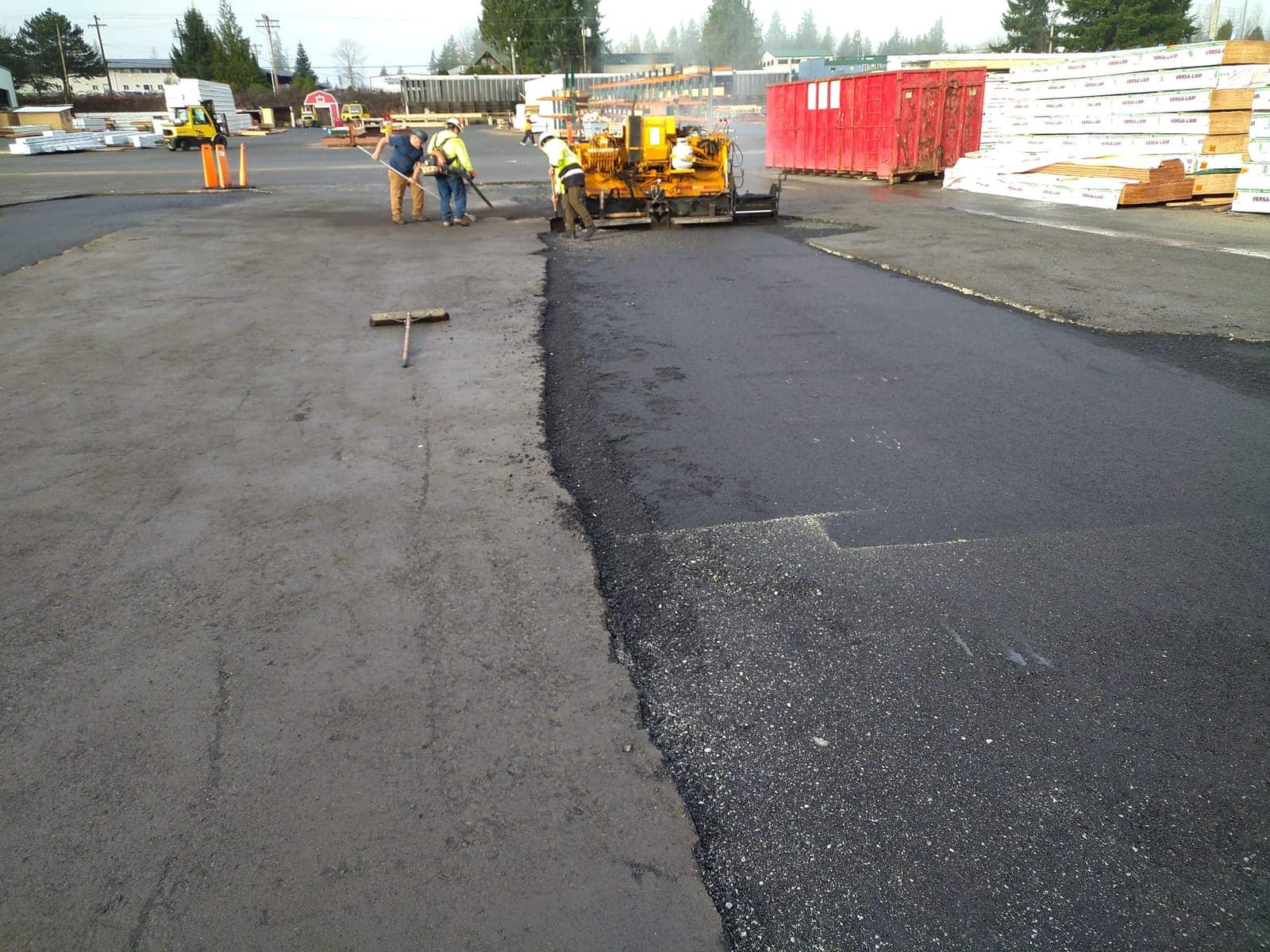
When is resurfacing the honest fix?
Resurfacing is the honest fix when the wear is at the surface but the base still drains and carries load: cracking or raveling everywhere, broken nowhere, more patches than original pavement. If the base itself has failed, an overlay just buries the problem, and we’d rather lose the job than bury your money.
Applies to
- Tired driveways
- Aging lots
- Access roads
Cracking and raveling across the surface, but a base that still carries load
A driveway or lot that looks worn everywhere and broken nowhere
More patches than original pavement
A surface at the end of its top layer, not its life
How does an overlay go down?
Resurfacing starts with a judgment call, and the judgment is the product: overlay the wrong base and the money is buried.
Prove the base
We assess whether the foundation still drains and carries load. Widespread base failure means this is the wrong page, and we say so.
Prep the old surface
Failed sections are repaired, significant cracks are filled, and the worn top gets milled off where grades and transitions demand it.
The new course
A fresh wearing course goes down over the prepared surface and is rolled tight to grade: a new road on an old foundation.
What drives the cost of asphalt resurfacing?
An overlay delivers a like-new surface for well under rebuild cost, and the assessment that proves the base is free. From there the number moves with the area being resurfaced, how much repair and crack work the old surface needs first, whether milling is required at grades and transitions, and the thickness of the new course.
Call (253) 397-8674- Prep repairs
- Failed sections get cut out and rebuilt before the overlay goes down. The more of them, the more the prep carries the price.
- Milling
- Grinding the worn top off at doorways, drains, and transitions keeps grades right. Some surfaces need it across the whole area.
- Area and course thickness
- Square footage and the wearing course’s thickness set the material. Heavier traffic calls for more mat.
How long does resurfacing take?
Most residential overlays are done in a day or two on site. Lots run longer and can be phased so parking never disappears all at once. Like all hot-mix work it wants dry, mild weather, so the season runs late spring through early fall. Plan on staying off the new course for a few days of cure. We give exact guidance when we finish.
Straight judgment on overlays.
An overlay done right adds a decade or more of life. Done wrong, it buries the problem for a season. Twenty-plus years in the trade around Puget Sound taught us which is which, and we’ll tell you before a dollar moves. Good materials, straight judgment, and a crew on the phone every day from 6 AM to 6 PM.
The proof is in the photographs.
Our own crews on our own jobs around Puget Sound, every frame captioned as exactly what the camera saw. Not a stock photo among them.
See the asphalt projectsAsphalt resurfacing, answered.
The questions we answer on the phone all day, written down. If yours isn’t here, call. The line’s open every day, 6 AM to 6 PM.
- What’s the difference between resurfacing and repaving?
- Resurfacing (an overlay) installs a fresh layer of hot-mix asphalt over existing pavement whose base is still structurally sound. Full repaving removes the old surface and rebuilds from the base up. When the foundation is good, resurfacing delivers a like-new surface for significantly less than a full rebuild.
- Is my driveway or parking lot a candidate for resurfacing?
- If the damage is mostly at the surface (cracking, raveling, a worn and faded top layer) and the base underneath still drains and carries load properly, resurfacing is usually a strong option. Widespread base failure or drainage problems call for a different fix. We’ll assess your pavement at a free consultation and tell you which side of that line it’s on.
- How long does a new asphalt overlay last?
- A properly installed overlay commonly adds a decade or more of service life, and regular maintenance, crack sealing and periodic sealcoating, stretches it further. The keys are honest prep of the existing surface and quality material, which is exactly where we don’t cut corners.
- Will resurfacing fix the cracks I already have?
- We repair and fill significant cracks before the overlay goes down, which is what gives the new surface a sound footing. Severe existing cracks can eventually telegraph through an overlay, so we’re upfront about any areas that need deeper repair first: covering up a problem isn’t fixing it.
- Is resurfacing worth it compared to repaving?
- When the base is sound, yes: an overlay delivers a like-new surface at well under the cost of a full rebuild and commonly adds a decade or more of life. When the base has failed, no: the overlay buries the problem for a season. The free assessment is what tells you which side of the line your pavement is on.
The work that rides along.
Most jobs pair one service with another: a repair wants a sealcoat after, a fresh overlay wants its lines back. These are the exits we take most often from this page.
Asphalt Paving
New asphalt for driveways, lots, and private roads: graded, based, laid hot, and rolled to a tight finish.
Asphalt Repair
Failed sections cut back to sound pavement and rebuilt: cracks, sunken spots, broken edges, old patches.
Asphalt Maintenance
Inspection, crack sealing, patching, and seal-coat cycles: the quiet work that keeps small problems small.
Talk to the crew.
Tell us where the surface is and what it’s doing, and we’ll tell you what it needs. Estimates are free, and the line’s open every day, 6 AM to 6 PM.